
What is stepparent adoption?
Stepparent adoption is the legal process by which the spouse of a child’s legal parent becomes a legal parent of that child. The relationship stops being a step-relationship and becomes parentage, with the same standing the other parent has.
The point worth holding onto: it is not a permissions upgrade. Signing school forms, consenting to treatment, being on a passport application — those are things people hope adoption will fix, and adoption does fix them, but as a side effect of a much larger change. What actually moves is who the child’s legal parents are.
How is it different from being a step-parent?
By default, marriage to a child’s parent creates almost no legal authority over that child. Adoption creates all of it, and takes it from someone else.
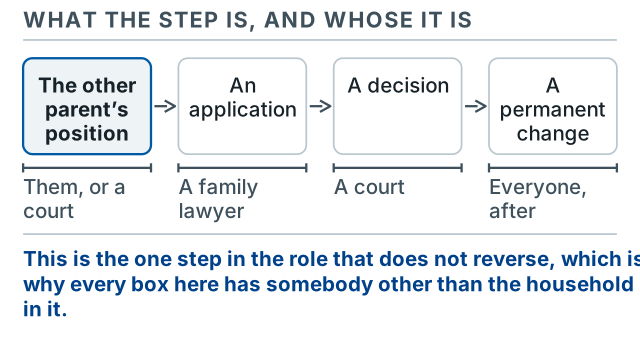
That second half is the part most short explanations skip. A legal parent is a person the law recognises as the child’s parent, which is a narrower thing than the person doing the parenting, and a child normally has two at a time. For a step-parent to become one, the child’s other legal parent generally has to consent or have their status ended by a court. Consent means, in this sense, that parent’s agreement to give up the status, rather than agreement with the marriage or with the household. Everything that makes step-parent adoption slow, contested or impossible traces back to that single fact.
The narrower question of what marriage alone does give you is covered on step-parent rights.
What does it usually involve?
Categories, not steps, because the steps differ everywhere:
- A petition to a court. Adoption is granted by a judge, not registered at a counter.
- Consent, or a substitute for it. From the other legal parent, and in many places from the child once they reach a certain age.
- Screening of some kind. Often lighter for step-parent cases than for agency adoptions, but rarely absent.
- A hearing. Frequently short and uncontested when everyone agrees, and the moment the change actually happens.
- Downstream paperwork. Records, names and beneficiary designations do not update themselves.
Anything more precise, such as who files, what it costs, how long it sits, or what counts as grounds when a parent will not consent, is jurisdiction-specific and changes over time. This page will not guess at it, and a page that does is guessing at yours.
What changes afterwards, beyond the paperwork?
Legally: support obligations, inheritance rights and decision-making authority all move with parentage. The adopting parent takes them on; the other parent generally sheds them. Not everything follows automatically, though. A beneficiary designation is the instruction attached to a policy or an account naming who receives it, and it stays as written until someone changes it; for example, a policy filled in years before the adoption still names whoever it named then. Inheritance in particular stops being the exception it usually is for stepchildren, a subject with its own page under stepchildren and inheritance.
Practically: families describe adoption as settling a paperwork question and opening a family one. Contact with the other parent’s relatives, what the child is told and when, and what the child is called are separate conversations that outlast the hearing. Some families raise them with a family therapist or mediator before filing rather than after.
Why this page is short
Because the honest useful part is small. The search results for this term are dominated by law firms writing about one state and by government pages writing about one country, and both are more accurate for their reader than any general guide can be.
What a general page can do is define the term correctly, flag that consent is the hinge, and send you to the right counterparty with the right questions. Anything past that would be invented detail dressed as guidance.
Where this page stops
This page describes what stepparent adoption is and which questions it raises. It does not state the law anywhere, and nothing here is legal advice or safe to rely on in a proceeding. For eligibility, consent, cost or timing, the answer comes from a family lawyer or the court or agency handling adoptions in your jurisdiction.
Where the difficulty is about the family rather than the filing — how a child feels about it, how the other household will react — a family therapist or mediator is the appropriate route. If a child’s safety is involved, contact your local emergency services or a helpline in your country rather than reading further.
The rest of the role, paperwork aside, sits under being a stepparent.