A second wedding is a marriage ceremony held by someone who has been married before, and the only firm thing about the category is that it has no template. Almost everything published under the heading is custom rather than requirement, and customs move: the confident instructions about dress, guest lists and who pays are usually one generation’s habit written in the voice of a rule.
Wedding etiquette refers to a body of social convention about how a ceremony and its surrounding events are conducted. It is not law, it is not uniform between places, and it has no enforcement mechanism, which is why this section describes what couples report doing and says plainly when something is only a custom.
What do couples actually do for a second wedding?
The full range, and the range itself is the finding. Formats described run from a registry appointment with two witnesses through to a full reception, with a large middle ground of small ceremonies followed by a meal. No format is the correct one for a remarriage, and the ones presented as more tasteful are simply the ones a particular writer prefers.
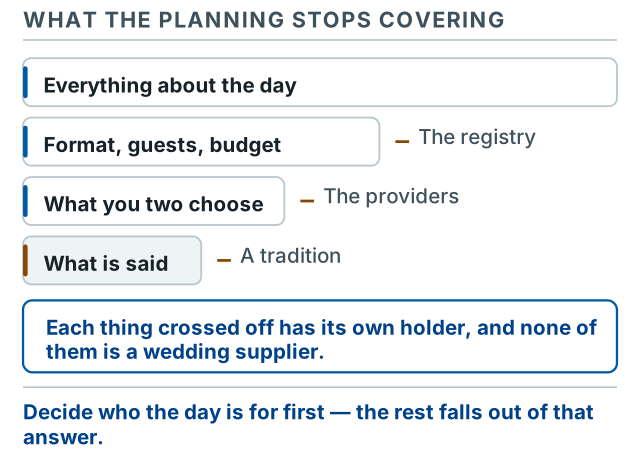
What does most of the work is deciding who the day is for before deciding anything else. The guest list, the budget and the ceremony format all fall out of that answer, and they contradict each other when it is left unspoken. The page on second wedding ideas collects the formats and what couples say each one cost them in effort.
Which etiquette questions actually come up?
Four, repeatedly: who pays, who is told and in what order, who is invited, and what to do about gifts when both households already own everything. None of them has a correct answer, and all of them have a workable one that depends on the households involved.
The order of telling is the one people underestimate. Consider a household where children learn of the engagement from a social post or from a relative: the sequence of those conversations is remembered long after the wedding, and it costs nothing to plan. The etiquette page works through all four, and marks each convention as what it is rather than as an instruction.
Where do the children fit into the day?
Wherever they have been asked to fit, which is not the same as wherever they have been placed. Households describe a spread of arrangements: a spoken part, a practical job such as handing over rings or signing as a witness where the local registry allows it, attending without a role, or not attending. All of those are reported as workable, and the difference between them tends to matter less than whether the offer was genuine and refusable.
A vow is a promise spoken in a ceremony. It is an undertaking between the people making it and carries no legal effect towards a stepchild, so a promise made to a child in front of guests does not alter anyone’s standing — that question belongs to a family lawyer and to the stepparenting section. Vows to stepchildren are covered on blended family vows; the couple’s own wording, including whether to mention a first marriage or a late spouse, is on second marriage vows.
What belongs somewhere other than the wedding planning?
Everything with a date attached to it. Whether a previous marriage is finally and fully ended in the eyes of the authority that will register this one is a question for that registry, and for a family lawyer where a divorce granted in another country is involved. What the wedding date does to a payment, a policy, a pension nomination or an existing will belongs with the providers who hold them and with money and paperwork.
Where a tradition either partner belongs to has its own view of a previous marriage, the clergy or tribunal of that specific tradition is the only place that answer holds. This site does not rule between traditions and does not summarise them.
Where this section stops
At the point where the day becomes paperwork or becomes someone else’s family. Registration questions go to the registry, recognition of a foreign divorce to a family lawyer, anything touching a child’s standing to a family lawyer as well, and a contested question about how the children are involved to a family therapist or mediator rather than to a wedding page.