What do people actually do for a second wedding?
They shrink it and shorten it. Second wedding ideas are mostly format choices rather than themes: a civil ceremony with a long lunch afterwards, a ceremony at home or in a garden, a short trip with the children built into it, or a private exchange of vows with a party added weeks later. The common thread is not economy — it is that the day is built around people who already know both partners well.
The reason is structural rather than sentimental. A first wedding is often partly an event for two families and whoever is paying. A second one usually has one funder, a shorter list of people whose presence is non-negotiable, and at least one household of children whose day it also is.
That changes what the planning is for. The question stops being how to stage a large occasion correctly and becomes how to mark something clearly in front of the people it affects. A civil ceremony is the version conducted by a registrar or civil celebrant rather than within a faith tradition, and it underpins several of the formats below.
How big does a second wedding need to be?
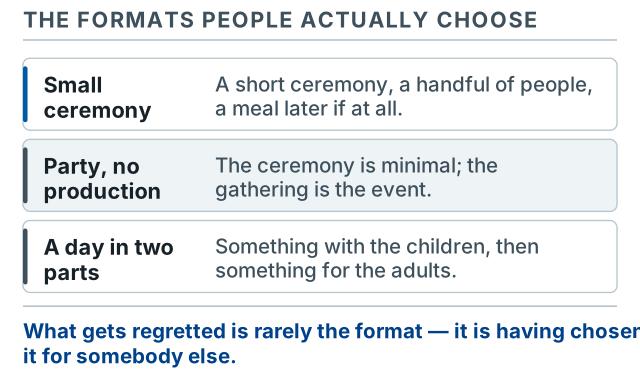
As big as the number of people who would be genuinely hurt to hear about it afterwards. That is the working test couples describe, and it usually produces a much shorter list than the venue’s minimum.
Formats that come up repeatedly, roughly by scale:
- Registry office and a meal. The ceremony is brief by design, and the afternoon carries the weight. Cheapest to organise and the easiest to do at short notice.
- At home or in a garden. Suits couples who want children present without asking them to behave formally for hours. Catering is the only real logistics problem.
- A small trip. A handful of people travel; the ceremony sits inside a few days away. Works when both sets of children are coming, and stops working quickly when a custody schedule has to be renegotiated to allow it.
- Private ceremony, party later. The vows happen with two witnesses. A larger gathering follows once the pressure of the day itself is gone. Couples who did not want an audience for the emotional part name this one most often.
- Marking it without an event at all. Some couples sign the paperwork and mark the day privately. It is a legitimate choice and it is not a smaller marriage.
None of these is the correct one. What they differ in is which problem they solve: cost, children, travel, or being watched.
Where do children fit into the day?
That depends on the child, and the reliable move is to ask rather than to assign. Approaches families describe range widely: a visible role such as walking in together or holding rings, a spoken part, vows addressed to the children as well as to the partner, or a ceremony kept strictly between the two adults with the children simply present as guests.
Each has a cost families name. A public role can be meaningful, and it can also put a child on stage to display a feeling they have not settled yet. Keeping children out of the ceremony avoids that, and some children read it as being left outside the new arrangement. Age changes the answer more than anything else: a six-year-old and a sixteen-year-old are being asked two different things.
What comes up as workable regardless of format: telling children the plan before anyone else does, giving them a real option to decline a role without it becoming a story, and not making the day the moment a stepparent’s status is announced for the first time.
Wording for the ceremony itself, including vows that include children, is set out separately in blended family vows.
Who pays, and what does that change?
Usually the couple, and that single fact rewrites most of the etiquette. When the people marrying are also funding the day, the guest list, the format and the scale stop being negotiations with anyone else.
Where parents or other relatives offer to contribute, couples describe settling one thing in advance: whether the contribution comes with expectations about numbers or guests. Money that arrives with an implied guest list is a different offer from money that does not, and the distinction is easier to draw before it is accepted than after.
The other financial half of a second marriage is unrelated to the day itself and much more consequential — what marrying again does to property, wills and each partner’s children. An estate lawyer is the person who answers that, and the conversation belongs well before the invitations; we set out the questions in prenuptial agreements and inheritance.
What do you do about gifts when both households already own everything?
Say something in the invitation. The gift question is genuinely awkward at a second wedding because two established households are merging, and guests are left guessing at a figure or a list that nobody has published.
What couples do: state plainly that presence is enough, name a charity, ask for contributions towards a trip or something for the new shared home, or keep a very short list of things the combined household actually lacks. A line on the invitation naming a charity, for example, answers the question before a guest has to ask it. Any of these is easier on guests than silence.
There is no standard sum for a second wedding gift, and pages that quote one rarely name where it came from. Treat numbers circulating on wedding sites as folklore about custom rather than findings.
Traditions people keep, and the ones that quietly get dropped
Most couples keep the parts that mean something to them and drop the parts that were about a first marriage’s staging. Dress rules, veils, being given away, a full bridal party, a bouquet toss, formal speeches from fathers — all of these now sit in the optional column in most etiquette guides, which have loosened considerably.
Things frequently kept: vows spoken aloud, a witness or two who matter, a first dance, a toast from someone who knows both people rather than one family. Things frequently dropped: the receiving line, the wedding party, a formal engagement announcement, and anything requiring a rehearsal.
Customs are not rules, and the ones attached to second marriages have changed faster than most. We describe how they currently sit in second wedding etiquette; the language couples actually use is in wedding vows for a second marriage.
The guest list, and the people from the first marriage
This is the part with no tidy solution. Common tensions couples name: friends who attended the first wedding, in-laws from a previous marriage who are still the grandparents, and — where children are old enough to raise it — whether a former spouse hears about the day in advance or by accident.
What people report doing rather than what anyone should do: telling former in-laws directly if they are still part of the children’s lives, giving the co-parent notice when children are attending so the schedule can be arranged as logistics rather than as a confrontation, and accepting that some guests from a first wedding will not be at this one.
Nothing here is a technique for managing another adult. It is scheduling and information. A mediator is a neutral third party brought in when two co-parents cannot hold that conversation directly, and that is the route where it applies.
What has to be sorted before the day, not after?
The paperwork, and it is dull compared to the venue. Marrying again changes documents that were written when circumstances were different, and the gap between the ceremony and someone noticing that gap is often years.
This page is not legal or financial advice and does not state what any rule is anywhere. It lists what to ask and who to ask.
Where this page stops
We describe formats and what couples report choosing. We do not tell any family how to include a child, and we do not assess anyone’s reasons for marrying again.
Where the difficulty is about a child’s wellbeing rather than about seating and timing, a family therapist is the right next step, and a mediator where the disagreement is with a co-parent about the schedule. Anything about property, wills, benefits or the legal requirements of the ceremony goes to a family or estate lawyer, a registrar, or the provider that holds the plan. If anyone involved is unsafe or in crisis, contact a helpline in your country or local emergency services.
The rest of this hub is at The wedding, again.